


Let’s dive into the latest news, resources, and use cases from the world of product, UX, AI and technology:
📊 Product-Market Fit
🛑 AI Slowdown
💥 Vulnerability Explosion
💸 Trillion-Dollar Gamble
💰 Theft
👀 Gaze Detection
Podcast
Finding Product-Market Fit with Ken Gavranovic
Discover how seasoned technology executive Ken Gavranovic shares insights on building innovative products, leading digital transformation, and harnessing AI to drive business growth. Whether you’re an aspiring entrepreneur or a product leader, learn practical strategies to navigate and excel in the tech landscape.
News and Useful Reads
Top A.I. Leaders Call for Slowing Down A.I. Development
I’m not sure what to make of this yet. The CEO of Anthropic has called for a slowdown of AI development, which I agree with. But the fact that most other AI CEOs have agreed to it feels suspicious. And the accusation of collusion has already been raised in a lawsuit.
Dario Amodei, the chief executive of Anthropic, called for a global slowdown of artificial intelligence development in a 3,800-word essay on Saturday, just days after one of the company’s employees quit over concerns about the safety of the technology.
Top executives of other major A.I. companies quickly signed on to the effort. Sam Altman, the chief executive of OpenAI; Elon Musk, whose SpaceX rocket company has been ramping up spending on A.I.; and Demis Hassabis, the chair of Google DeepMind, wrote in social media posts that they agreed on the need for a slower pace.
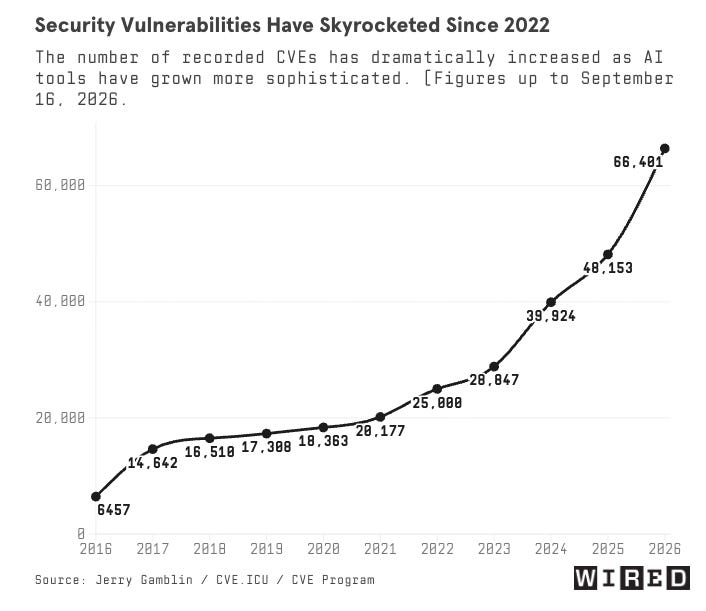
Forget the AI Slowdown—the Vulnerability Explosion Is Already Happening
AI doomers have recently traded one worst-case scenario for another, putting aside a potential software vulnerability apocalypse to focus on the possibility of rogue AI causing mass human death in the next decade. As AI leaders consider a cooperative slowdown on frontier model development, though, one aspect of the cybersecurity sea change has already arrived thanks to existing, broadly available capabilities in mainstream AI products, including open weight models.
A tidal wave of vulnerabilities uncovered using AI has only accelerated in recent months—piling more pressure on under-resourced, and very human, IT and security teams and straining volunteers who maintain crucial open source software. Researchers found and disclosed a vast array of vulnerabilities before the rise of AI-enhanced bug hunting as well, but the recent surge is clear.
What must happen for AI’s trillion-dollar gamble to pay off
Given the incredible amount of investment we’ve seen in AI infrastructure, one of the biggest questions is, “what will it take to make it worth it?” And the answer seems similarly incredible.
The results are eye-opening: The AI companies will need to increase their own productivity by a factor of 2.7 to break even by 2030, accounting for the cost of capital and a 15% return, and depreciation of the assets. Not impossible, says Wachter. The result would lead to the kind of economic growth that we saw during the US IT boom over a period of about 10 years starting in the mid-1990s. But, she says, for it to happen by 2030 “that’s a lot of growth compressed into a few years.” And if the hyperscalers cannot meet such profit goals?
Microsoft exec called AI scraping ‘the largest theft of labor in human history,’ new unredacted filings reveal
New unredacted information in the copyright lawsuit The New York Times brought against OpenAI and Microsoft three years ago reveals an admission that AI scraping was tantamount to theft, and that AI products pose a major threat to publications.
Per the lawsuit, a top Microsoft executive privately described the companies’ AI training practices as “theft,” and OpenAI’s own leadership said its AI models posed an “existential threat” to the publishers and journalists whose work trained them.
Other Interesting Finds
Humans can tell when someone is watching them.
I’ve always found it fascinating that we are able to sense when someone is looking at us. But it seems like we can actually do that, and there is scientific evidence to back it up.
Humans are good at sensing when someone is looking at them. While some label this gut feeling a kind of sixth sense, it’s really a biological phenomenon known as gaze detection, caused by a complex neural network in our brain.