


Here’s the latest news, resources, and use cases from the world of product, UX, AI and technology. Let’s go:
📊 AI in Healthcare
💸 Apple Hikes
💻 OpenAI Chips
👩💼 Meta Data
🙈 Mythos
❔ False Alignment
💼 RTO and Ego
Podcast
Harnessing AI in Healthcare: Insights from RJ Kedziora
In this episode of Product by Design, Kyle Evans interviews RJ Kedziora, co-founder of Estenda, a company specializing in custom software and data analysis for healthcare. We discuss RJ’s journey in technology and entrepreneurship, the importance of energy management over time management, and the role of AI in healthcare. RJ shares insights into the challenges and future of AI applications, the need for ethical considerations, and the potential for personalized healthcare solutions. He also offers advice to aspiring entrepreneurs looking to make a difference in the industry.
Prodity: Product Thinking is a reader-supported publication. To receive new posts and support my work, consider becoming a free or paid subscriber.
News and Useful Reads
Apple is hiking the prices of MacBooks and iPads due to the memory chip shortage
AI is causing a lot of problems—from hurting new grads, to pollution, to using significant water. Now, we’re seeing prices rise for our electronics as AI is sucking up most of the memory for electronics.
Apple has hiked prices on some of its most popular products, including the MacBook and iPad, because of the rising costs of memory and storage chips sparked by the AI boom.
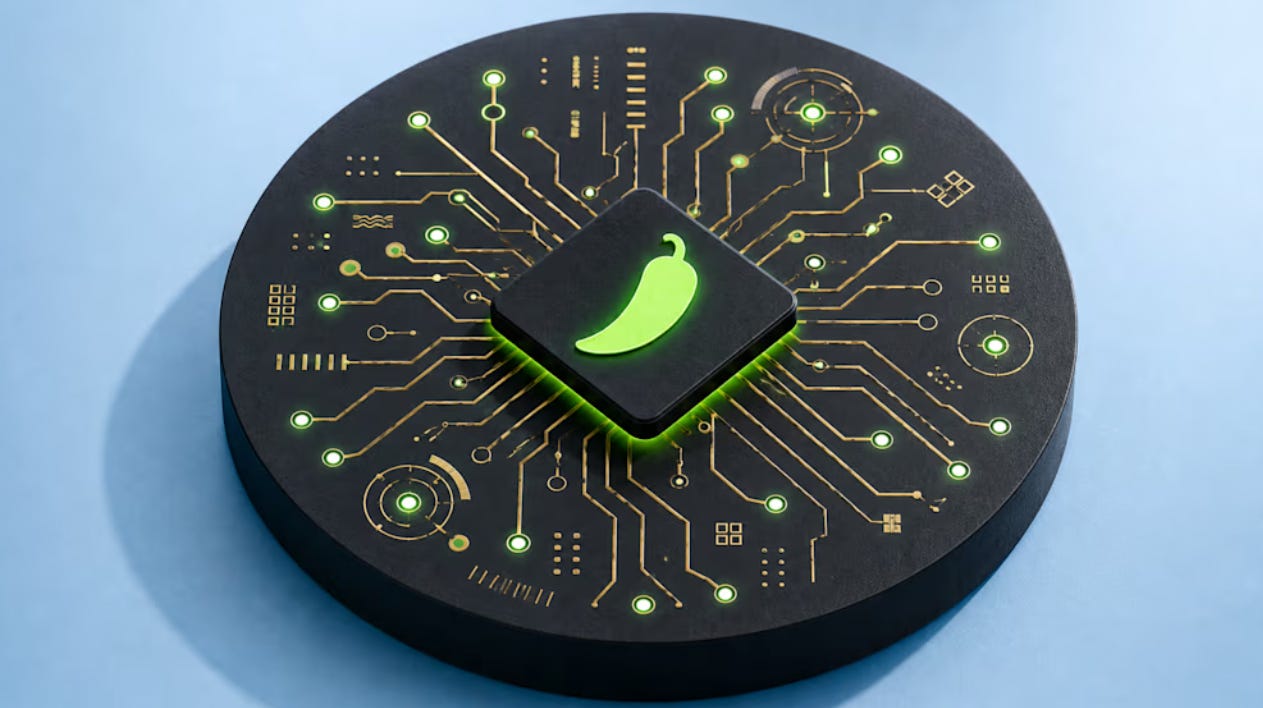
OpenAI unveils first custom AI inference chip, Jalapeño, with Broadcom — and its development was sped-up with OpenAI’s own models
Every major lab is now trying to own the infrastructure underneath its models: OpenAI just unveiled Jalapeño, SpaceX has Colossus 2 leased to Google and Reflection AI ($80B+ in committed compute revenue through 2029), Anthropic landed a Nobel-winning AlphaFold researcher this week, and Gemini 3.5 Pro is still sitting unreleased past its promised June deadline.
According to its creators, Jalapeño is designed to support workloads behind ChatGPT, Codex, the API and future agentic products, though notably, both OpenAI's and Broadcom's news releases position it as a product that could be made available to external AI firms as well — "built from the ground up for current and future LLMs across the industry."
Meta Pauses Employee-Tracking Program Following Internal Data Leak
Meta has paused its very controversial program that tracked employees so it could train AI models. Though it probably won’t stay paused for long.
Meta rolled out the Model Compatibility Initiative (MCI) tool in April to US employees. The tool “collects computer inputs such as mouse movements, click locations and keystrokes, as well as screen content,” according to workers who have been petitioning against it over privacy, security, and personal liberty concerns. When MCI launched, employees couldn’t opt out, but that changed to a limited degree after workers protested.
Anthropic’s Mythos mess is only getting worse
It’s been two weeks since Anthropic took its Mythos-class models offline after a Friday evening ultimatum from the Trump administration. The company sprang into action immediately, sending a barrage of executives to Washington, DC. But updates have been suspiciously lacking, with no resolution in sight.
The False Alignment Trap
Change can be very difficult, especially at the organizational level. And it is often because leaders think everyone is on board, when the reality is quite the opposite.
Alignment and agreement are not the same. Alignment suggests a set of objects that are positioned in a line or perhaps facing the same direction. When company leaders say, “We are aligned,” what they usually mean is, “We are not in one another’s way.” Or perhaps, “We have discussed this topic at least once and generally accept the contours of a plan.”
Other Interesting Finds
The Secret Reason Bosses Want Everyone Back in the Office, Every Day of the Week
This was probably my favorite read of the week. As many of us are dealing with executives that want everyone back in the office, it’s fun to look at the real reasons why. Spoiler, it’s about ego and control.
Some leaders say they insist on full-time in-person work because it boosts productivity, despite clear evidence that it does not. Others claim it’s about collaboration, creativity or culture. Our new research reveals that the objection to any work from home is more likely to be driven by something else entirely: ego.