


Here’s the latest news, resources, and use cases from the world of product, UX, AI and technology. Let’s go:
📊 AI in Healthcare
😥 Emotional Surveillance
🖼️ Art
💵 Global AI Diffusion
👨💻 Tech Layoffs
🏃♀️➡️ AI Health
🛸 UFO Files
Podcast
Harnessing AI in Healthcare: Insights from RJ Kedziora
In this episode of Product by Design, Kyle Evans interviews RJ Kedziora, co-founder of Estenda, a company specializing in custom software and data analysis for healthcare. We discuss RJ’s journey in technology and entrepreneurship, the importance of energy management over time management, and the role of AI in healthcare. RJ shares insights into the challenges and future of AI applications, the need for ethical considerations, and the potential for personalized healthcare solutions. He also offers advice to aspiring entrepreneurs looking to make a difference in the industry.
Prodity: Product Thinking is a reader-supported publication. To receive new posts and support my work, consider becoming a free or paid subscriber.
News and Useful Reads
The Rise of Emotional Surveillance
Soon, it may not be enough to do your work. AI may judge us on how likeable and sociable we are as well. This type of technology is already used in call centers and other places to score conversations and give advice. But it may be coming for everyone.
Extractive technologies, he wrote, come first to people in precarious circumstances—like, say, low-wage jobs—before they are refined and normalized and brought to people in greater positions of power. “Each disciplinary technology,” he later wrote, “starts with people way down on the ladder, then ascends the ladder, rung by rung.”
What Makes Art Great?
AI isn’t capable of making good art. It can mimic art, whether images or writing, but it can’t make something that is good, especially when you know what good art or writing looks like.
Great art is not predictable or obvious, it is surprising.
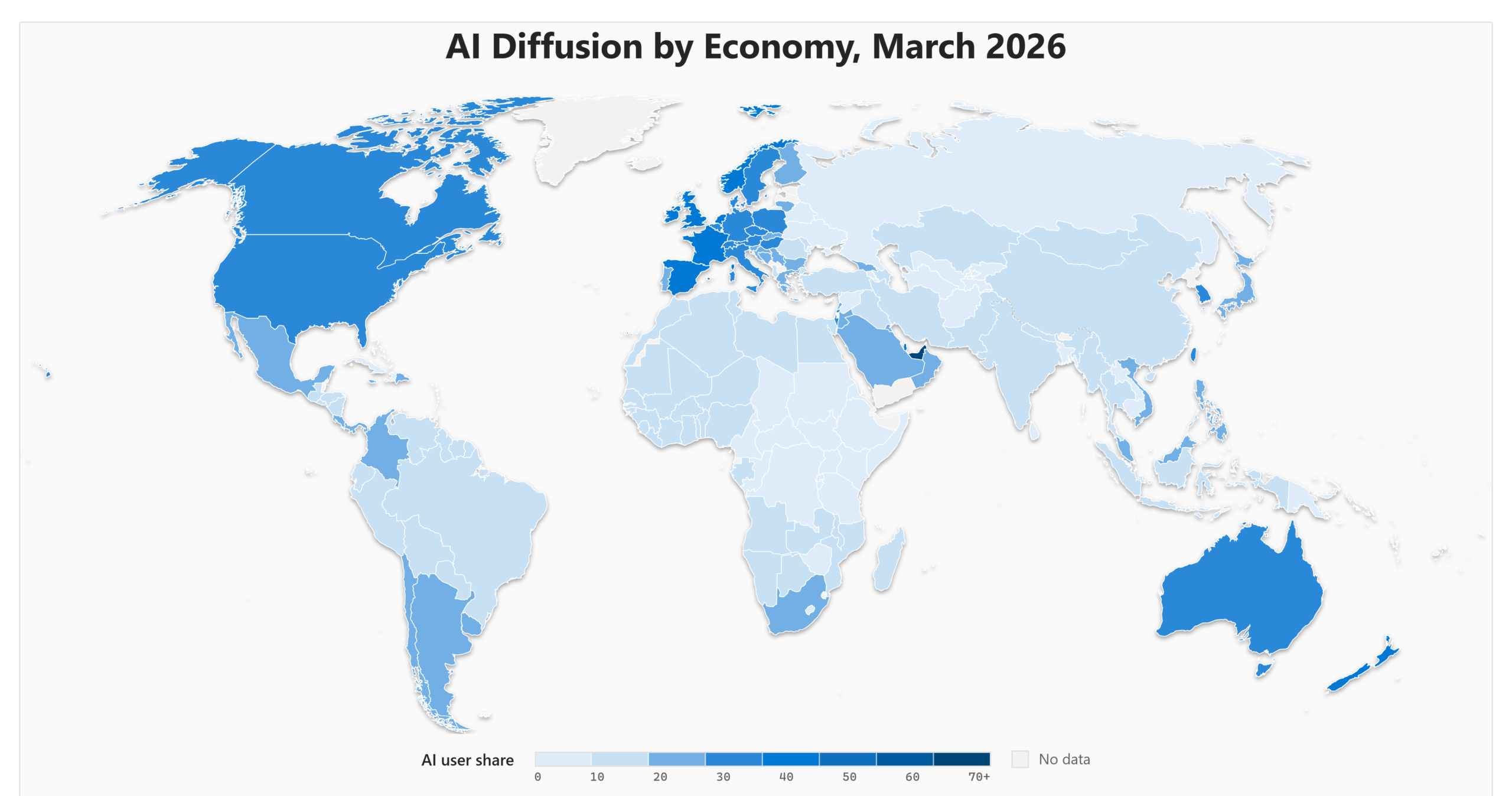
The state of global AI diffusion in 2026
The global adoption of artificial intelligence continued to rise in the first quarter of 2026. During the quarter, AI usage increased by 1.5 percentage points from 16.3% to 17.8% of the world’s working age population. Intensity of use among economies with the highest rates of AI diffusion also increased, with 26 economies now exceeding 30% of the working age population using AI.
Tens of Thousands of Tech Workers Are Being Laid Off in 2026. The $725 Billion That Replaced Them Is Going to Four Companies.
Tech layoffs are happening across the industry. But many of those layoffs aren’t because of productivity gains from AI, they are to finance more spending on AI.
If Meta fired every single one of its employees tomorrow, it would save $27 billion against a $145 billion infrastructure check. The AI capex line is four to five times the entire payroll line. Layoffs are not the cost-cutting story here. Layoffs are the financing.
Google’s $9.99-per-month AI health coach launches May 19
Google is updating some of its health offerings with a new Fitbit and an AI coach. The new Fitbit Air seems like something that’s worth a look, especially for those of us who don’t want to wear a smartwatch all the time.
Leveraging Google’s Gemini AI, the new Google Health Coach will offer personalized insights to users, acting as a combination fitness coach, sleep expert, and health and wellness advisor. The service has been in public preview since last year and has been undergoing improvements based on user feedback, the company said.
Other Interesting Finds
‘Orbs,’ ‘Saucers,’ and ‘Flashes’ on the Moon: Pentagon Drops New UFO Files
The Pentagon released some much-anticipated files this past week.
The release of roughly 160 documents was rolled out on a new website. Among the trove is video footage and images of tantalizing UAP sightings captured around the world. The files also contain scanned historical material about government UAP and unidentified flying object (UFO) programs dating back to the 1940s and the Apollo program.