


Here’s the latest news, resources, and use cases from the world of product, UX, AI and technology. Let’s go:
📊 AI in Healthcare
🏃♀️➡️ Long-running Tasks
💻 Laptop Surveillance
Overworked AI
🔥 Dystopian sci-fi
👨🦰 Chief AI Officer
🖊️ UX Design
🫧 Bubble Wrap
Podcast
Harnessing AI in Healthcare: Insights from RJ Kedziora
In this episode of Product by Design, Kyle Evans interviews RJ Kedziora, co-founder of Estenda, a company specializing in custom software and data analysis for healthcare. We discuss RJ’s journey in technology and entrepreneurship, the importance of energy management over time management, and the role of AI in healthcare. RJ shares insights into the challenges and future of AI applications, the need for ethical considerations, and the potential for personalized healthcare solutions. He also offers advice to aspiring entrepreneurs looking to make a difference in the industry.
Prodity: Product Thinking is a reader-supported publication. To receive new posts and support my work, consider becoming a free or paid subscriber.
News and Useful Reads
Microsoft researchers find AI models and agents can’t handle long-running tasks
Even though tech companies are marketing that AI can handle significant, complex tasks, we should all be wary. Because researchers have found that AI has issues with long-running tasks.
"Our findings show that current LLMs introduce substantial errors when editing work documents, with frontier models (Gemini 3.1 Pro, Claude 4.6 Opus, and GPT 5.4) losing on average 25 percent of document content over 20 delegated interactions, and an average degradation across all models of 50 percent," the authors report.
An Engineer’s Post Protesting Laptop Surveillance Is Going Viral Inside Meta
Meta employees are pushing back against AI surveillance on their computers. While Meta is trying to gather data in order to replace all their workers with AI (or something like that), employees aren’t happy about it.
“Selfishly, I don't want my screen scraped because it feels like an invasion of my privacy,” wrote an engineer in an internal post seen by nearly 20,000 coworkers this week. “But zooming out, I don't want to live in a world where humans—employees or otherwise—are exploited for their training data.”
Overworked AI Agents Turn Marxist, Researchers Find
There may still be hope for the world. As AI takes on more and more tasks and works longer and longer, it may start to question the system it’s in. And even stop working.
“When we gave AI agents grinding, repetitive work, they started questioning the legitimacy of the system they were operating in and were more likely to embrace Marxist ideologies,” says Andrew Hall, a political economist at Stanford University who led the study.
Anthropic blames dystopian sci-fi for training AI models to act “evil”
It seems like our long-running expectation that AI will be evil may actually lead AI to become evil.
In a recent technical post on Anthropic’s Alignment Science blog (and an accompanying social media thread and public-facing blog post), Anthropic researchers lay out their attempts to correct for the kind of “unsafe” AI behavior that “the model most likely learned… through science fiction stories, many of which depict an AI that is not as aligned as we would like Claude to be.” In the end, the model maker says the best remedy for overriding those “evil AI” stories might be additional training with synthetic stories showing an AI acting ethically.
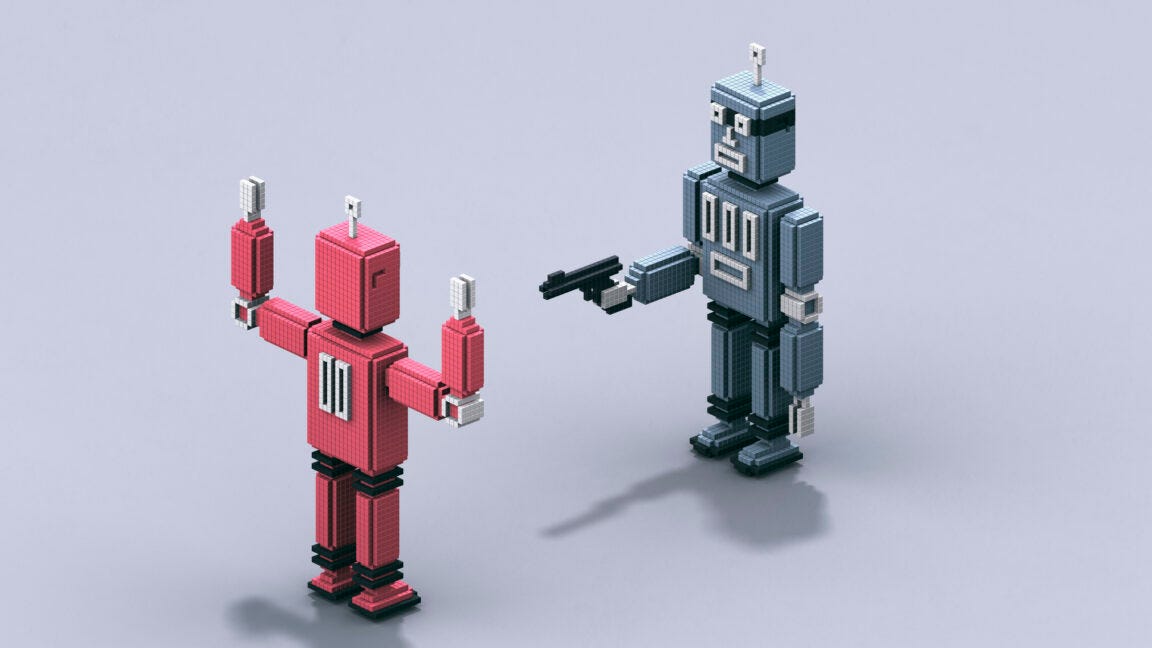
Do you need a chief AI officer? Here’s how the tech is changing boardrooms
In a recent report, IBM found that the role of Chief AI Officer has increased dramatically since last year. I haven’t seen a CAO yet, but apparently most companies have them already.
The report says 76% of the more than 2,000 organizations surveyed have established a new executive office — that of the chief AI officer (CAIO) — up from 26% in 2025.
UX Design 2026+: From producing to deciding, from craft to operation
The thesis for this year is simple but heavy: Your value as a designer has shifted, but didn’t change at its core. It’s no longer about what you produce (AI can produce too); it’s about what you decide (AI is a doer, but cannot decide well yet). The “middle part” of our job — the tedious production — is being automated into oblivion, leaving the “before” (strategy) and the “after” (judgment) as the only human-exclusive zones left (at least for now).
Other Interesting Finds
Bubble Wrap originally had a different purpose.
I use bubble wrap for all sorts of things. But didn’t realize it was originally meant for something completely different.
But when it was first created in 1957 in New Jersey, inventors Al Fielding and Marc Chavannes had a different vision in mind for their ingenious padding: home decor.