


Let’s dive into the latest news, resources, and use cases from the world of product, UX, AI and technology:
⚒️ Building for Yourself
🛜 Neural Networks
🥸 AI Economic Flaw
✏️ UX
🤖 Permanent Underclass
🧱 Move Slow and Make Things
🎃 Halloween
Podcast
Build It for Yourself First: Todd Katcher on Internal Tools, AI Reality Checks, and Why the Best Product Doesn’t Win
In this episode, Kyle and Todd talk about how one conversation can change a company’s direction, and how Todd’s team builds its own tools when off-the-shelf software covers only 80% of what they need. That approach produced Zoney, Convert It, PriceAlerts, and an e-signature platform. Todd explains how he decides what to build, what to keep internal, and what to take to market, including why building their own CRM didn’t make the cut. They also take an honest look at AI: where it saves real time, where it still needs a critical human eye, and why managing expectations matters. The conversation closes on Todd’s biggest lesson: making the product is rarely the hard part. Getting people to buy it is.
News and Useful Reads
“We were looking at it wrong”: The explosive claim that’s upended the AI world
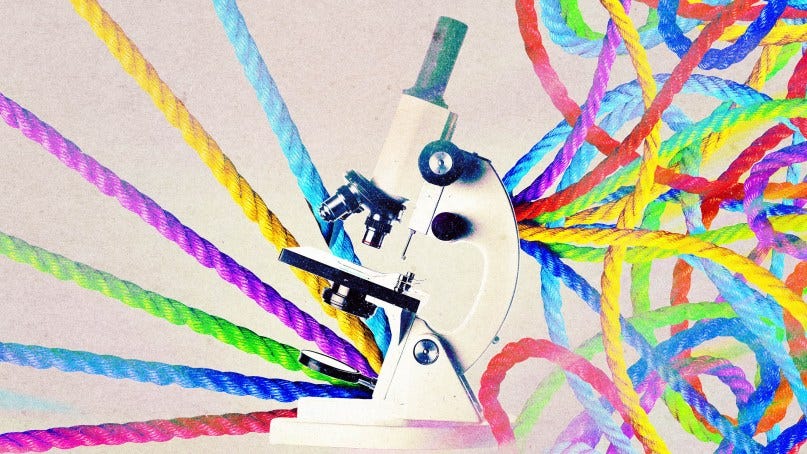
Maybe understanding AI neural networks isn’t as complicated as we’ve made it seem. While still speculative, it seems like we may just need to look at them differently.
Cammarata’s claim is that LLMs might in fact be far easier to understand—and thus to monitor and control—than people previously thought. If true (and we’ll come back to that), it’s a huge deal.
Here’s the ‘core economic flaw’ in the AI bull case as stock and bond trades unravel, according to a top economist
“The core economic flaw in the AI bull case is that the marginal cost of producing compute exceeds the marginal benefit it delivers to users, raising questions about claims of unlimited demand for data centers,” he explained. “How much compute and how many data centers are needed depends on the returns firms are able to generate with that compute. So far, the AI payoff for firms has been slow to materialize, implying a growing reluctance to pay for AI services.”
AI in UX: Work Is Faster, But Practitioners Have Mixed Feelings
Like most of us, UX practitioners have mixed feelings about AI. It can be useful and speed up parts of the process, but it isn’t a silver bullet.
We surveyed 521 UX practitioners about how they use AI at work and how it’s affecting them. The short answer: AI use is widespread and saves time, but practitioners are far from enthusiastic, and the benefits depend heavily on role, task, and workplace.
The idea of a “permanent underclass” started as a meme. It’s tapping real anxieties in Silicon Valley.
The billionaires and heads of AI companies are promising we may not need to work anymore because of AI. But if the history of technology offers any lessons, it’s that the benefits of AI and increased productivity won’t go to most of us. And many are feeling that anxiety.
AI could create a “permanent underclass,” a subcategory of (sub)humans that may very likely include you and me and everybody else we know if we do not entrench ourselves against the impending AI superintelligence, which could very well reduce the worth of all human labor to zero.
Move slow and make things: What Japanese craftsmanship can teach business about quality, patience, and expertise when AI makes speed cheap
This article speaks to my soul. As someone who does woodworking (along with other similar hobbies), I deeply appreciate that it takes time to become an expert and to make things that are worthwhile. And that is something it is easy to overlook in our age of technology and AI.
For thirty years, the dominant logic of Western business has been simple: move fast and break things. The first mover has the advantage. Scale before you’re ready. Ship before it’s perfect. Ask forgiveness later. This thinking has produced extraordinary wealth and genuine innovation. It has also created a generation of companies that mistake velocity for value, and are only belatedly discovering that the two are not the same thing.
Speed is now free, which means, for the first time in history, speed is worthless.
Other Interesting Finds
The Origins of Halloween Traditions
The Halloween holiday has its roots in the ancient Celtic festival of Samhain (a Gaelic word pronounced “SAH-win”), a pagan religious celebration to welcome the harvest at the end of summer, when people would light bonfires and wear costumes to ward off ghosts. In the eighth century, Pope Gregory III designated November 1 as a time to honor saints. Soon after, All Saints Day came to incorporate some of the traditions of Samhain. The evening before All Saints Day was known as All Hallows Eve, and later, Halloween. Here is a look at the origins of some of the classic Halloween traditions we know today.